



Advancements in agricultural sciences are reshaping the way crops withstand mounting environmental pressures. By harnessing the power of genomics, researchers and breeders are unlocking new pathways to enhance resilience, boost yield, and secure global food supplies. This exploration delves into the cutting-edge strategies that leverage DNA insights to create crops capable of thriving despite the challenges of climate change.
The Role of Genetic Mapping in Cultivar Development
Genetic mapping has emerged as a cornerstone in modern plant breeding. By charting the location of specific genes on chromosomes, scientists can pinpoint traits such as drought tolerance and disease resistance. Marker-assisted selection (MAS) accelerates this process, allowing breeders to track favorable alleles without waiting for plants to fully mature.
High-Density SNP Arrays
- Single nucleotide polymorphisms (SNPs) offer millions of data points for each genome.
- High-density arrays enable precise mapping of quantitative trait loci (QTL).
- Integration with field trials refines selection for complex traits.
Benefits for Breeders
- Reduced breeding cycles by up to 50%.
- Minimized resource expenditure on inferior lines.
- Enhanced ability to stack multiple beneficial markers in a single variety.
Genome Editing Technologies Transforming Breeding
The advent of CRISPR/Cas9 and related platforms has revolutionized crop improvement. By enabling targeted modifications at precise genomic loci, these tools offer unparalleled control over trait expression.
CRISPR Innovations
- CRISPR-Cas9: Standard method for gene knockout or introduction.
- Base editors: Allow single-nucleotide changes without double-strand breaks.
- Prime editing: Combines reverse transcriptase with Cas9 for versatile edits.
Applications in Stress Tolerance
Researchers have successfully edited genes involved in stomatal regulation, osmoprotectant synthesis, and root architecture to confer superior resilience under drought and salinity stress. For instance, targeted disruption of negative regulators of water-use efficiency has yielded lines with up to 30% improved performance in water-limited environments.
Integrating Phenotyping and Genomic Data
While genetic diversity provides the blueprint, accurate phenotyping reveals the actual performance of cultivars under varied conditions. Integrating high-throughput phenotyping platforms with genomic datasets is essential to predict which genetic configurations will thrive in the field.
Remote Sensing Technologies
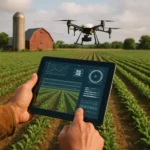
- Unmanned aerial vehicles (UAVs) collect multispectral images for canopy health assessment.
- Ground-based sensors monitor soil moisture, plant temperature, and chlorophyll content.
- Automated image analysis correlates phenotypic metrics with underlying genotypes.
Predictive Analytics in Breeding
Machine learning models ingest genomic markers, environmental parameters, and phenotypic records to forecast performance across multiple locations. This approach refines selection indices and informs cross-design strategies, minimizing the number of field trials needed to validate elite lines.
Future Prospects in Impressive Agriculture
As climate variability intensifies, the demand for crops that maintain productivity under stress will only increase. Emerging trends point toward synergy among various genomic tools, data science, and precision agronomy.
Pan-Genome Resources
- Comprehensive catalogs of gene presence–absence variations across diverse accessions.
- Identification of novel alleles conferring adaptive benefits in marginal environments.
- Enhanced understanding of genome architecture and structural variants.
Gene Editing Beyond Model Crops
Extending CRISPR and related technologies to orphan crops—millets, pulses, tubers—holds the promise of bolstering food security in regions most vulnerable to famine. Tailoring edits to local landraces preserves cultural heritage while boosting agronomic performance.
Sustainable Deployment Strategies
- Stacking traits for multi-stress resistance to anticipate simultaneous heat, drought, and pest pressures.
- Implementing gene drives for rapid dissemination of beneficial alleles in wild-relative populations.
- Fostering open-access genomic databases to democratize breeding innovations worldwide.
By aligning advanced genomics with traditional breeding wisdom, agriculture stands poised to meet the twin demands of productivity and sustainability. The fusion of high-resolution genetic insights, precision phenotyping, and robust predictive models will define the next era of crop improvement, ensuring resilient harvests for generations to come.