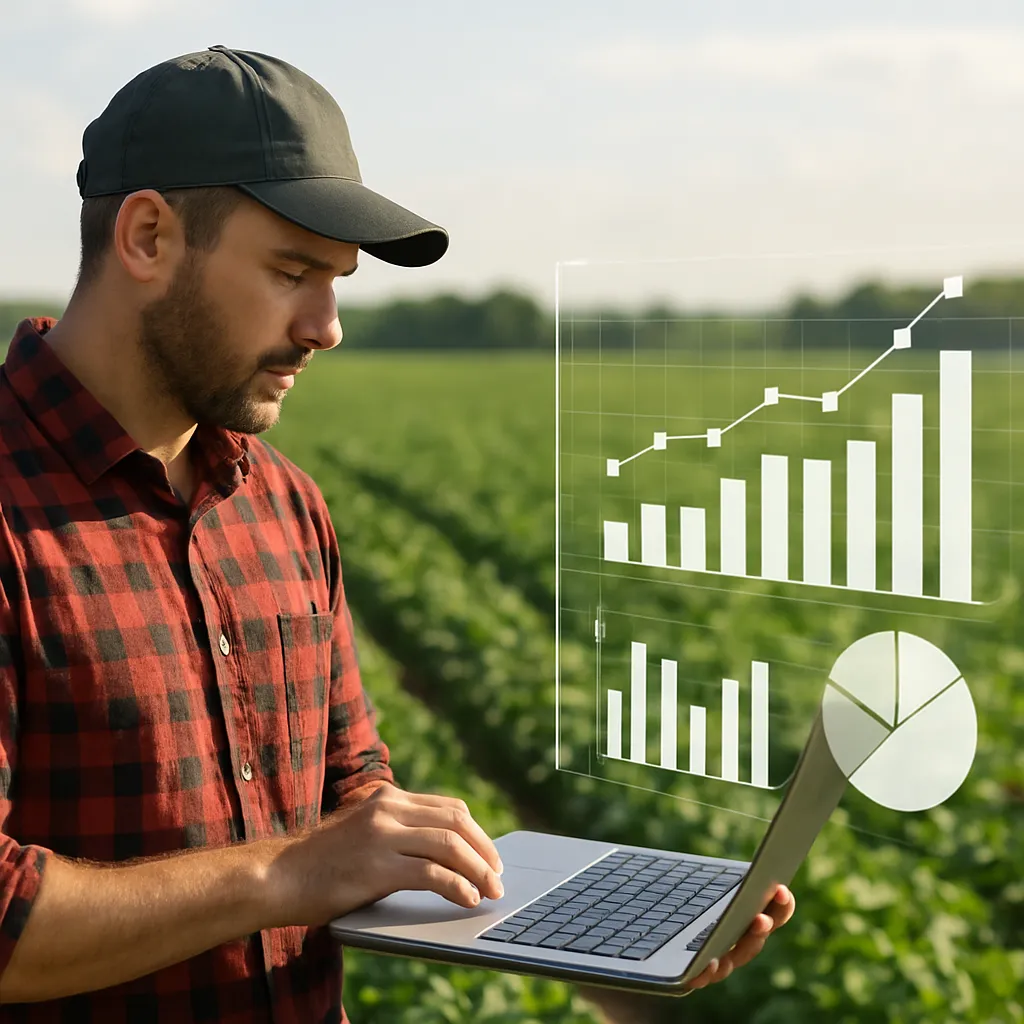








Innovation in the intersection of agriculture and technology has revolutionized the way farmers and traders approach the complex world of commodity pricing. By harnessing the power of Machine Learning, stakeholders can leverage vast datasets to deliver more accurate forecast models, optimize resource allocation and enhance overall profitability. In this article, we explore how data-driven solutions integrate with modern farming practices, advanced analytical techniques for predicting market dynamics and the broader impact on sustainable food systems.
Integrating Machine Learning with Precision Agriculture
The advent of precision agriculture has enabled producers to collect granular information about soil health, weather patterns and crop performance. With sensors, drones and satellite imagery, farms generate terabytes of data that would be impossible to interpret manually. Enter Machine Learning algorithms, which can process high-dimensional inputs and detect complex correlations. For example, farmers can use regression models and neural networks to determine the optimal fertilization schedule based on soil nitrogen levels and predicted rainfall.
Key components of this integration include:
- Predictive soil mapping – Using clustering algorithms to identify zones requiring different nutrient management.
- Yield prediction – Employing time-series models to anticipate harvest volume weeks in advance.
- Resource optimization – Applying reinforcement learning to minimize water usage while maintaining crop health.
These innovations not only improve field-level decision-making but also feed into larger commodity forecast platforms. By aggregating farm-specific models, analysts gain a more holistic view of supply projections, which feeds into price predictions for global markets.
Advanced Forecasting Techniques for Commodity Markets
Traditional commodity price modeling relied heavily on econometric formulas and historical trends. With the rise of analytics and modeling advancements, more sophisticated techniques have emerged:
- Ensemble learning – Combining multiple models (e.g., random forests, gradient boosting machines) to reduce variance and bias in price forecasts.
- Deep learning – Utilizing recurrent neural networks (RNNs) and long short-term memory (LSTM) networks to capture temporal dependencies in price series.
- Natural language processing – Analyzing news feeds, weather reports and social media chatter to gauge market sentiment in real time.
For instance, by feeding satellite-derived crop health indices alongside futures contract data into an LSTM architecture, traders can identify early signals of supply shortfalls or gluts. This capability allows them to adjust hedge positions, recommend policy interventions or guide farm cooperatives on bulk sales timing. The combination of quantitative and qualitative inputs yields a more robust and data-driven approach to forecasting volatile markets.
Enhancing Sustainability and Profitability
While accurate price predictions are crucial for economic returns, the broader aim is to ensure sustainability within agricultural systems. Machine Learning models contribute by:
- Minimizing chemical overuse – Predictive analytics can determine the precise moment to apply pesticides, reducing environmental impact.
- Lowering carbon footprint – Route optimization for machinery and logistics cuts fuel consumption and emissions.
- Supporting crop diversification – Advanced clustering can recommend alternative crops better suited to shifting climate regimes, bolstering resilience.
Moreover, improved forecasting fosters equitable market access. Smallholders equipped with smartphone-based analytics platforms gain insights previously reserved for large agribusinesses. This democratization of technology promotes fair pricing and reduces exploitation by intermediaries.
Case Study: Smart Grain Trading Cooperative
A grain cooperative in Eastern Europe implemented a data-driven platform combining farm sensor outputs, local weather station APIs and futures market data. By applying a stacked ensemble model, they achieved a 15% reduction in inventory holding costs and secured better contract terms with international buyers. The project underlines how targeted innovations in forecasting can transform regional agricultural economies.
Future Directions
As computing power continues to scale, emerging techniques such as federated learning and explainable AI promise to further refine commodity price predictions. Federated systems allow multiple stakeholders to collaboratively train models without sharing proprietary data, preserving privacy while enhancing collective accuracy. Explainable AI methods offer interpretability, helping agronomists and traders understand why certain variables drive price movements.
The synergy between Machine Learning and impressive agricultural practices heralds a new era of efficiency, profitability and environmental stewardship. By bridging field-level insights with global market analytics, this integrated approach empowers decision-makers across the entire value chain to respond dynamically to evolving conditions and secure food supplies for future generations.