




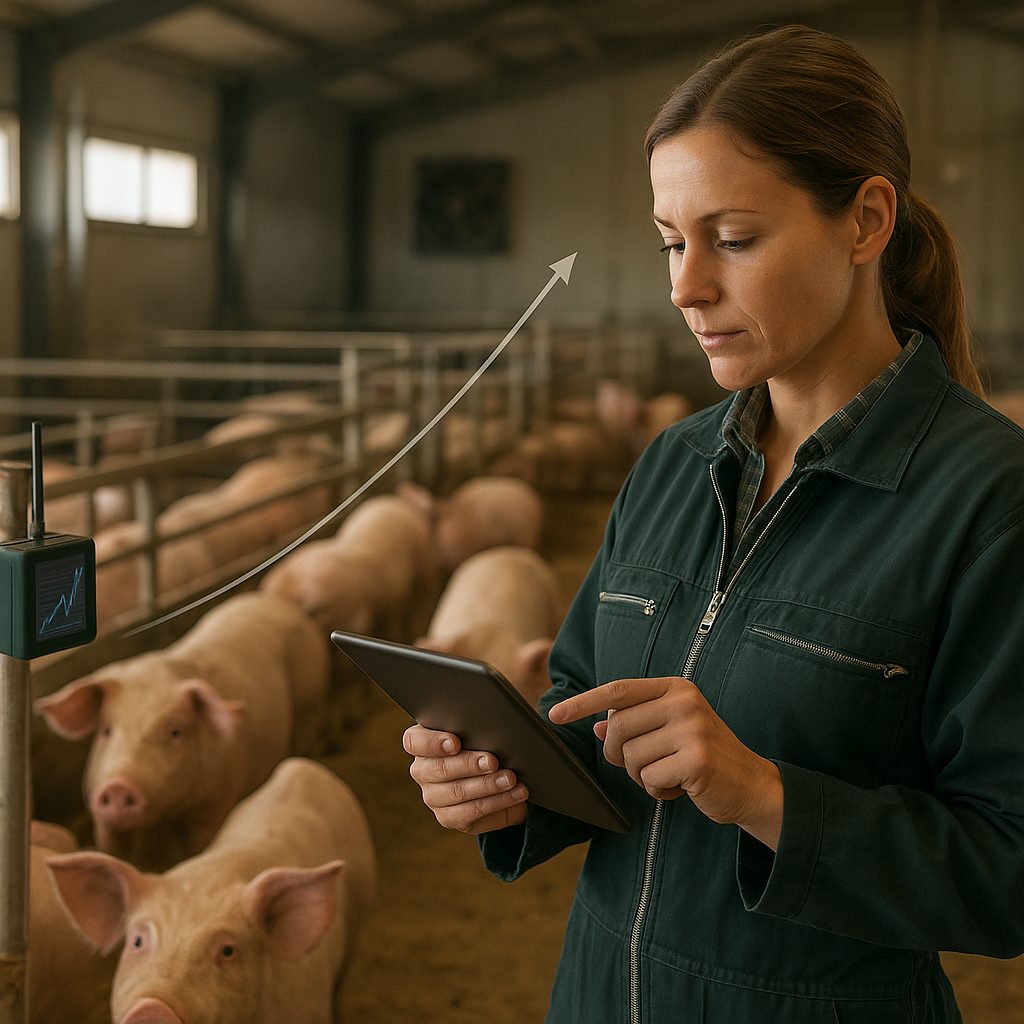
The convergence of cutting-edge technology and agricultural expertise is **transforming** the way farmers manage their herds. Precision livestock farming (PLF) harnesses real-time monitoring, advanced sensors, and **data-driven** decision-making to optimize every aspect of animal production. By offering granular insights into individual animals’ health, behavior, and productivity, PLF not only enhances **profitability** but also promotes **sustainability** and animal **welfare**. This article explores the multifaceted economic benefits of precision livestock farming, demonstrating its role as a game-changer in modern agriculture.
Advancements in Financial Performance through Precision Livestock Farming
Optimizing Feed Efficiency
Feed costs typically represent the largest expense on livestock farms. With the implementation of automated sensors and smart feeders, farmers can:
- Monitor individual animal feed intake in real time.
- Adjust rations dynamically based on growth stage, weight, and health status.
- Minimize feed wastage and reduce overall consumption.
By shifting from blanket feeding regimes to **customized** nutritional plans, producers can achieve up to a 15% reduction in feed costs, directly improving the bottom line.
Reducing Veterinary Expenses
Early detection of health issues is critical for limiting costly interventions. PLF systems leverage wearable collars, ear tags, and floor-weight platforms to track:
- Vital signs such as temperature and heart rate.
- Behavioral anomalies like reduced mobility or altered feeding patterns.
- Subtle indicators of disease before clinical symptoms appear.
Timely treatment can cut veterinary expenses by **fifty percent**, thanks to reduced hospitalizations, fewer medications, and lower mortality rates. The integration of real-time **analytics** ensures that farmers can intervene swiftly, preserving both animal health and financial resources.
Enhancing Reproductive Efficiency
Reproductive performance directly influences herd expansion and milk or meat production. Through the use of:
- Heat detection sensors that flag optimal breeding windows.
- Automated insemination scheduling tools.
- Data platforms that track conception rates over time.
Producers witness an increase in successful pregnancies and a reduction in the interval between calvings or litters. This translates to a higher yield per female animal and shortened payback periods for breeding stock investments.
Enhancing Sustainability and Animal Welfare
Environmental Impact Mitigation
Precision livestock farming contributes to **sustainability** by optimizing resource use and minimizing environmental footprints. Key features include:
- Manure management systems that adjust storage and agitation schedules to reduce methane emissions.
- Precision watering systems that deliver exact volumes per animal, reducing runoff and waste.
- Climate-controlled housing that maintains ideal temperature and humidity, boosting efficiency.
By lowering greenhouse gas emissions per kilogram of meat or liter of milk, farms can meet stringent environmental regulations and access green **financing** programs that offer lower interest rates or grants.
Improving Animal Welfare
Animal well-being is no longer a mere ethical requirement; it is an economic imperative. Welfare-focused PLF tools:
- Monitor lameness through gait analysis cameras, enabling early hoof-care interventions.
- Use activity trackers to detect stress or discomfort, prompting adjustments in stocking density or enrichment.
- Deploy automated health scoring modules that generate welfare metrics for certification schemes.
Enhancing **welfare** leads to healthier, more productive animals, reduces losses due to illness, and opens access to premium markets that demand certified humane practices.
Strengthening Supply Chain Traceability
Consumers and regulators increasingly demand transparent supply chains. PLF integrates traceability solutions such as blockchain-enabled recordkeeping and RFID tags to:
- Link products to specific animals, farms, and management protocols.
- Provide immutable logs of health treatments, vaccinations, and feed sources.
- Facilitate rapid responses to disease outbreaks, preventing widespread recalls.
Traceability drives **consumer** confidence and can justify price premiums, while also mitigating financial risks associated with food safety incidents.
Future Directions and Technological Integration
Artificial Intelligence and Predictive Modeling
Advanced algorithms are at the heart of next-generation PLF platforms. By employing machine learning to analyze historical and real-time data streams, systems can:
- Forecast disease outbreaks before clinical detection.
- Predict feed conversion ratios for new genetic lines.
- Optimize labor allocation by anticipating peak workload periods.
Predictive insights empower farmers to make proactive decisions, allocate resources efficiently, and sustain high levels of **resilience** in the face of market fluctuations or climatic challenges.
Automation and Robotics
Integration of robotics into livestock operations is accelerating. Key implementations include:
- Robotic milking systems that adapt milking routines to individual cow productivity.
- Automated cleaning robots that maintain hygiene in barns and feeding areas.
- Drone-based surveillance for extensive grazing operations.
These automated solutions reduce labor costs, improve consistency in routine tasks, and allow farmers to focus on strategic management, elevating overall farm **efficiency**.
Integration with Broader Agri-Tech Ecosystems
Precision livestock farming does not stand alone; it is part of an interconnected agri-tech revolution. Seamless data exchange between crop management, supply chain logistics, and market analytics platforms enables:
- Holistic farm planning aligning feed crop production with livestock nutritional demands.
- Dynamic pricing strategies based on real-time supply and demand indicators.
- Collaborative networks for knowledge sharing and co-development of novel solutions.
Such integration fosters an **impressive** agricultural system in which every node contributes to greater **profitability** and sustainability, unlocking unprecedented value across the entire value chain.