
Modern agriculture faces the monumental challenge of feeding a rapidly growing global population amid shrinking arable land, shifting weather patterns, and limited resources. Innovations in crop breeding powered by artificial intelligence offer a beacon of hope, marrying centuries-old agricultural techniques with cutting-edge computational tools. By leveraging massive datasets spanning genomics, phenomics, and environmental factors, researchers can accelerate the development of robust, high-yielding crop varieties that thrive under diverse conditions. This synergy holds the promise of bolstering food security, enhancing nutritional quality, and fostering climate-smart farming practices across the globe.
Harnessing Genomic Insights for Precision Breeding
At the heart of next-generation crop improvement lies the intricate blueprint coded within plant genomes. Traditional breeding has relied on observable traits and laborious cross-breeding cycles. Today, AI-driven algorithms can sift through terabytes of sequencing data to pinpoint genetic variants responsible for desirable characteristics. Machine learning models excel at detecting subtle associations between single nucleotide polymorphisms (SNPs) and performance metrics such as drought tolerance, pest resistance, or nutrient efficiency.
Genomic selection enables breeders to predict the breeding value of individual seedlings before they ever enter the field. By training predictive frameworks on historical trial outcomes, researchers can forecast how novel crosses will perform across environments. Such predictive modeling slashes the time required to release superior cultivars, yielding enormous cost savings and conserving precious resources.
Integrating genome editing techniques, especially CRISPR-Cas systems, into this pipeline amplifies potential gains. Precise modifications can knock out deleterious genes or introduce beneficial alleles from wild relatives without the lengthy backcrossing steps of conventional methods. This combination of AI-guided target discovery and molecular engineering embodies a transformative leap in crop improvement, promising varieties that deliver higher yields with lower inputs of water, fertilizer, and agrochemicals.
Accelerating Phenotyping and Data Integration
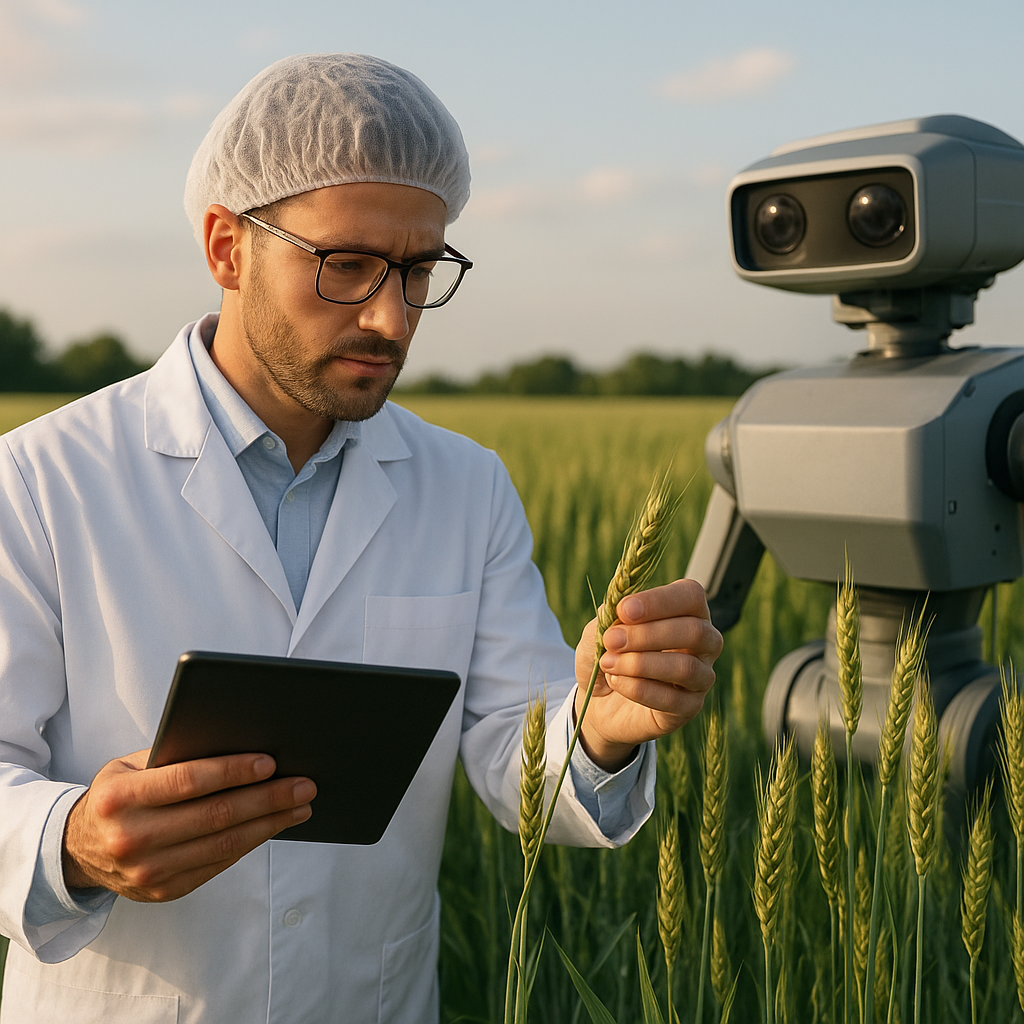
While genomic data provides one piece of the puzzle, real-world performance hinges on observable traits under field conditions. High-throughput phenotyping platforms, equipped with drones, hyperspectral cameras, and ground-based sensors, capture dynamic plant responses to environmental stressors at unprecedented scale. AI-driven image processing extracts phenotypic measurements—such as canopy coverage, leaf temperature, and growth rates—transforming raw imagery into actionable insights.
Data scientists fuse these phenotypic observations with weather records, soil profiles, and management histories to construct comprehensive models of genotype-environment interactions. Deep learning architectures excel at navigating these multidimensional datasets, uncovering patterns that elude conventional statistical approaches. For instance, convolutional neural networks can detect early signs of nutrient deficiency or pathogen attack, allowing breeders to select genotypes exhibiting innate resilience before visible symptoms emerge.
These integrated platforms facilitate rapid cycle testing in both controlled environments and target production zones. Automated decision-support tools recommend optimal crossing schemes and field trial designs, while cloud-based analytics ensure that breeding teams worldwide can collaborate seamlessly. This data-driven strategy elevates breeding efficiency and accelerates the deployment of locally adapted varieties pivotal for regional food security.
Field Implementation and Farmer Adoption
Even the most advanced breeding breakthroughs realize their full impact only when adopted by farmers. Bridging the gap between research institutions and end-users involves robust extension services, participatory trials, and tailored training programs. AI-powered mobile applications guide growers on best practices for new cultivars, offering site-specific recommendations on planting density, irrigation scheduling, and integrated pest management.
Ensuring equitable access to improved seeds calls for public-private partnerships that balance intellectual property rights with social responsibility. Seed distribution networks, cooperatives, and microfinance schemes play crucial roles in reaching smallholder farmers who cultivate the majority of the world’s staple crops. By combining technological innovation with grassroots engagement, stakeholders can amplify the reach of sustainability-oriented varieties designed for low-input, resource-constrained contexts.
Farmer feedback loops further refine breeding objectives. Digital platforms capture on-farm performance metrics and user experiences, feeding real-world data back into AI models. This continuous learning cycle ensures that breeding targets evolve in alignment with emerging challenges, such as new pest pressures or shifts in local dietary preferences, thereby reinforcing adaptive capacity and long-term viability.
Ethical Considerations and Global Impact
The rapid integration of AI into crop breeding raises important questions about data governance, biodiversity, and equitable benefit sharing. Proprietary algorithms and closed data repositories risk concentrating power among a few multinational corporations. Establishing open-access databases and transparent model validation protocols is critical for democratizing innovation and avoiding monocultures that endanger ecological stability.
Furthermore, as gene-edited crops enter regulatory frameworks, policymakers must balance risk assessment with the urgent need to address hunger and malnutrition. International collaboration among research centers, regulatory bodies, and farmer organizations will be essential to harmonize standards and facilitate the safe deployment of enhanced varieties across borders.
Looking ahead, integrating AI-enhanced breeding with emerging fields such as synthetic biology, microbiome engineering, and precision agriculture promises to revolutionize food systems. Collaborative networks that span disciplines and geographies will drive the co-creation of solutions tailored to diverse agroecosystems. By embracing innovation responsibly and inclusively, humanity can cultivate a future where no one goes hungry and agriculture thrives in harmony with the planet.