




Modern agriculture relies on machines of a size and power unimaginable a few decades ago. From 700‑horsepower articulated tractors to self‑propelled harvesters wider than a city street, these giants are the result of sophisticated mechanical, electronic and software design. Their role is to cultivate more land, faster and with higher precision, while reducing fuel, labour and input costs. The world of the largest agricultural machines combines traditional mechanical engineering with advanced hydraulics, data analytics and satellite guidance. To understand how these machines are designed, built and operated, it is worth exploring examples, technical solutions and the companies that specialise in them, such as biggesttractors.co.uk, where enthusiasts and professionals analyse both performance and engineering detail.
Scale and purpose of the largest agricultural machines
The push toward larger agricultural machines comes from a simple constraint: time. Harvest windows are short, weather is unpredictable and farms are getting bigger. A 12‑metre combine header or a 30‑tonne tractor allows a single operator to cover hundreds of hectares in a day. This scale is especially important in regions with vast fields, where work must be done quickly to minimise yield loss.
As machines grow, engineering challenges multiply. Components must carry higher loads, frames must resist twisting over rough ground and engines must deliver enormous power without overheating. Designers also need to maintain manoeuvrability, safety and soil protection. The result is a delicate balance between mass, power and ground contact area that pushes conventional engineering to its limits.
Powertrains and engines: delivering massive torque
At the heart of every large agricultural machine is a high‑displacement diesel engine engineered for reliable, continuous operation. Many top‑tier tractors and combines use 6‑cylinder or even V8 engines with displacements from 9 to more than 16 litres. These powerplants are optimised not for top speed but for continuous **torque** at low to medium rpm, allowing implements to be pulled steadily through dense soil or heavy crop material.
To meet emissions regulations while maintaining **power**, manufacturers use high‑pressure common‑rail fuel injection, variable geometry turbochargers and after‑treatment systems such as SCR with AdBlue, diesel particulate filters and exhaust gas recirculation. Engine mapping is carefully calibrated so that torque curves remain flat across working rpm ranges, enabling constant ground speed even when load changes abruptly, for example in patches of lodged grain or compacted soil.
Power transmission is another critical engineering area. Traditional stepped gearboxes have largely given way to powershift and continuously variable transmissions. In the largest tractors, CVT units use planetary gearsets and hydrostatic or electric power splits to keep the engine in its most efficient operating zone while allowing smooth speed changes from creeping rates for precision work to transport speeds on the road.
Chassis, frames and structural engineering
As tractors and harvesters have grown, structural integrity has become one of the most challenging aspects of design. Articulated four‑wheel‑drive tractors use a central hinge to steer the entire machine. The frame must withstand huge bending and torsional loads as the front and rear sections roll over uneven terrain in opposite directions. Finite element analysis helps engineers identify stress concentrations and optimise the placement of reinforcements while avoiding excess **weight**.
Large combines face different structural demands. The grain tank, often holding more than 14,000 litres, sits high on the machine, adding dynamic loads as grain flows in and out. At the same time the header, sometimes over 12 metres wide, exerts bending forces on the feeder house and front frame. Engineers use high‑strength steels and cast components in key zones, combined with carefully located cross‑members, to prevent cracking over thousands of operating hours.
Fatigue life is a primary design criterion. Instead of simply designing for maximum static load, engineers simulate millions of loading cycles, including braking, turning on headlands and travelling over rough roads with full tanks or heavy implements. Instrumented prototypes with strain gauges collect real‑world data, which is fed back into models to refine future designs.
Hydraulics and implement control
Hydraulic systems are central to the performance of large agricultural machines. High‑capacity pumps deliver hundreds of litres per minute at pressures that can exceed 200 bar. This fluid power drives steering, lifting of massive implements, header height control, reel speed adjustment, unloading augers and folding mechanisms for transport.
In modern tractors, load‑sensing hydraulic systems automatically adjust pump output to match demand, reducing fuel consumption and heat build‑up. Multiple rear and front remotes allow complex implements to be controlled independently. Flow rates and timing can be adjusted from the cab, and electronic control valves provide precise, repeatable movements — critical for tasks such as planter downforce control or variable‑rate fertiliser application.
Large self‑propelled sprayers and planters rely on sophisticated hydraulic or electro‑hydraulic systems to manage boom suspension, active levelling and section control. When a boom spans more than 36 metres, even a small oscillation can lead to significant overlap or gaps in coverage. Engineers design multi‑link suspension and use accumulators, dampers and position sensors to keep the boom stable at high speeds and over uneven fields.
Soil protection: tyres, tracks and ground pressure
One of the paradoxes of large machines is that while they must be heavy to provide traction and carry large loads, they must not damage the soil. Excessive compaction reduces pore space, limits root penetration and decreases yields. Engineering solutions focus on spreading the machine’s **weight** over a larger area to reduce ground pressure.
High‑volume radial tyres with flexible sidewalls and large contact patches are standard on many large tractors and harvesters. Some machines use central tyre inflation systems that allow operators to lower pressure in the field for maximum flotation and then reinflate for road transport. Engineers must account for the additional heat and sidewall deflection associated with very low operating pressures.
Rubber track systems are increasingly common on the largest machines. Two‑track or quad‑track designs distribute mass over long, wide belts, resulting in ground pressures closer to those of a person on foot than a conventional tractor. Track modules are complex assemblies containing idlers, mid‑rollers, tensioning systems and robust final drives. The suspension inside these modules must absorb shock loads and conform to ground irregularities while maintaining precise track alignment.
Precision guidance and automation
The rise of precision agriculture has transformed how large machines are guided and controlled. Satellite‑based guidance systems, using GPS and differential correction technologies, enable pass‑to‑pass accuracies down to 2.5 cm or better. With this level of precision, overlap is minimised, input usage is reduced and field operations are more uniform.
Auto‑steering systems integrate with hydraulic or electric steering actuators, allowing the machine to follow pre‑planned paths with minimal operator input. On large machines where visibility is limited, automated guidance reduces fatigue and human error, especially at night or in dusty conditions. Engineers must ensure that steering systems are both responsive and robust, able to maintain line tracking on slopes and in varying traction conditions.
Beyond steering, automation now touches many other functions. Combine harvesters can automatically adjust rotor speed, concave clearance, fan speed and sieve settings based on crop type, yield, moisture and loss sensors. Large tractors can manage engine and transmission settings for optimal fuel efficiency, while planters and sprayers use section control and variable‑rate application driven by prescription maps and real‑time sensor feedback.
Cab design, ergonomics and operator safety
The cab of a large agricultural machine is effectively a mobile control room. Visibility, control layout and comfort influence productivity as much as raw mechanical **power**. Engineers design expansive glass areas, optimised pillar positions and multiple mirrors or camera systems to provide a clear view of implements, headers and traffic.
Interior layouts concentrate frequently used controls on armrests or multifunction joysticks, reducing the need for the operator to reach or twist. Touchscreen terminals display machine parameters, guidance lines, implement settings and diagnostic alerts. Active suspension for both cab and seat reduces vibration exposure, which can be significant during long days over rough surfaces.
Safety requirements are rigorous. Cabs must meet rollover protection standards and provide emergency exits. Fire risks are addressed through careful routing of exhaust components, shielding of hot surfaces and optional automatic fire suppression systems, especially important on large combines operating in dry crop residues. Engineers model airflow to prevent dust build‑up near engine compartments while keeping fresh air intakes clean.
Data connectivity and digital engineering
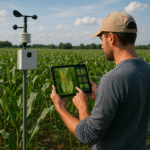
Modern large machines are deeply connected devices. Telemetry modules transmit data on fuel consumption, engine load, fault codes, location and productivity to cloud platforms. Farm managers and dealers can monitor fleets in real time, schedule maintenance and analyse field performance across seasons.
From an engineering perspective, this connectivity allows usage patterns to be studied at scale. Manufacturers gather anonymised data on how often full engine power is used, how frequently certain alarms appear and which gears or speeds are most common. This information feeds back into design decisions, helping engineers optimise cooling systems, gearbox ratios and software logic for real‑world conditions, not just test tracks.
Software updates can now add features, refine fuel mapping or fix bugs without requiring a service visit. At the same time, cybersecurity becomes a critical aspect of design, ensuring that remote access to machine controls is tightly managed and encrypted.
Manufacturing techniques and materials
Building the largest agricultural machines requires advanced **manufacturing** processes and strict quality control. Laser‑cut and robot‑welded steel structures provide consistent, strong joints in complex geometries. Large castings for axles, gearboxes and final drives are precisely machined and then tested using ultrasonics or X‑ray imaging to detect internal flaws.
Material selection balances strength, fatigue resistance, weldability and cost. High‑strength low‑alloy steels are used for frames and booms, while abrasion‑resistant steels protect areas subjected to wear from soil or crop material, such as combine augers and elevator housings. Composite materials and high‑grade plastics appear in panels, fuel tanks and interior components, reducing **weight** and corrosion.
Before full production, prototypes undergo extensive validation. Endurance tests simulate thousands of hours of service in accelerated time, often in dedicated test fields or laboratories with hydraulic actuators that reproduce field loads. Climatic chambers expose machines to extreme temperatures, ensuring reliable operation from freezing winters to very hot summers.
Energy efficiency and environmental impact
With such massive machines, fuel consumption is a major concern both economically and environmentally. Engineers strive to improve efficiency through multiple strategies: optimised combustion, better transmission design, reduced parasitic losses in hydraulics and intelligent power management that shuts down or idles components when not needed.
Aerodynamics, though less critical at field speeds, matter for large tractors and sprayers that travel significant distances on roads. Fairings and smooth panel transitions reduce drag and wind noise. Cooling systems are carefully designed to manage heat with minimal fan power, using variable‑speed electric or hydraulic fans and optimised radiator cores.
There is increasing interest in alternative **power** sources, including hybrid architectures and the use of biofuels or HVO. While full electrification of the largest machines is constrained by current battery energy densities, electric drives are appearing in subsystems such as fans, seed meters and pumps, where precise speed control and instant torque bring performance and efficiency benefits.
Future trends in large machine engineering
The engineering behind the largest agricultural machines continues to evolve in response to economic, environmental and social pressures. Autonomous operation is one of the most significant trends. Large machines may eventually work in coordinated fleets with smaller robotic units, combining the efficiency of scale with the flexibility and reduced compaction of lighter equipment.
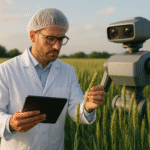
Sensor fusion — combining cameras, lidar, radar and on‑machine **sensors** — will improve obstacle detection, crop monitoring and implement control. Real‑time analysis of plant health, soil variability and yield will allow machines to adapt on the move, changing seeding, fertiliser or crop protection rates row by row or even plant by plant.
Engineers are also exploring modular architectures, where power units, track modules and implement carriers can be reconfigured for different seasons and tasks. This approach may extend machine lifespans and reduce the environmental footprint associated with manufacturing and disposal.
Conclusion
The largest agricultural machines embody a convergence of mechanical, hydraulic, electronic and digital engineering. Their immense **power**, precision and productivity are essential in feeding a growing global population with finite land and labour. Behind every giant tractor, combine or sprayer lies years of modelling, field testing and incremental improvement. As technology advances, these machines will become even more efficient, intelligent and integrated into broader farm management systems, continuing to reshape how modern agriculture operates at scale.