
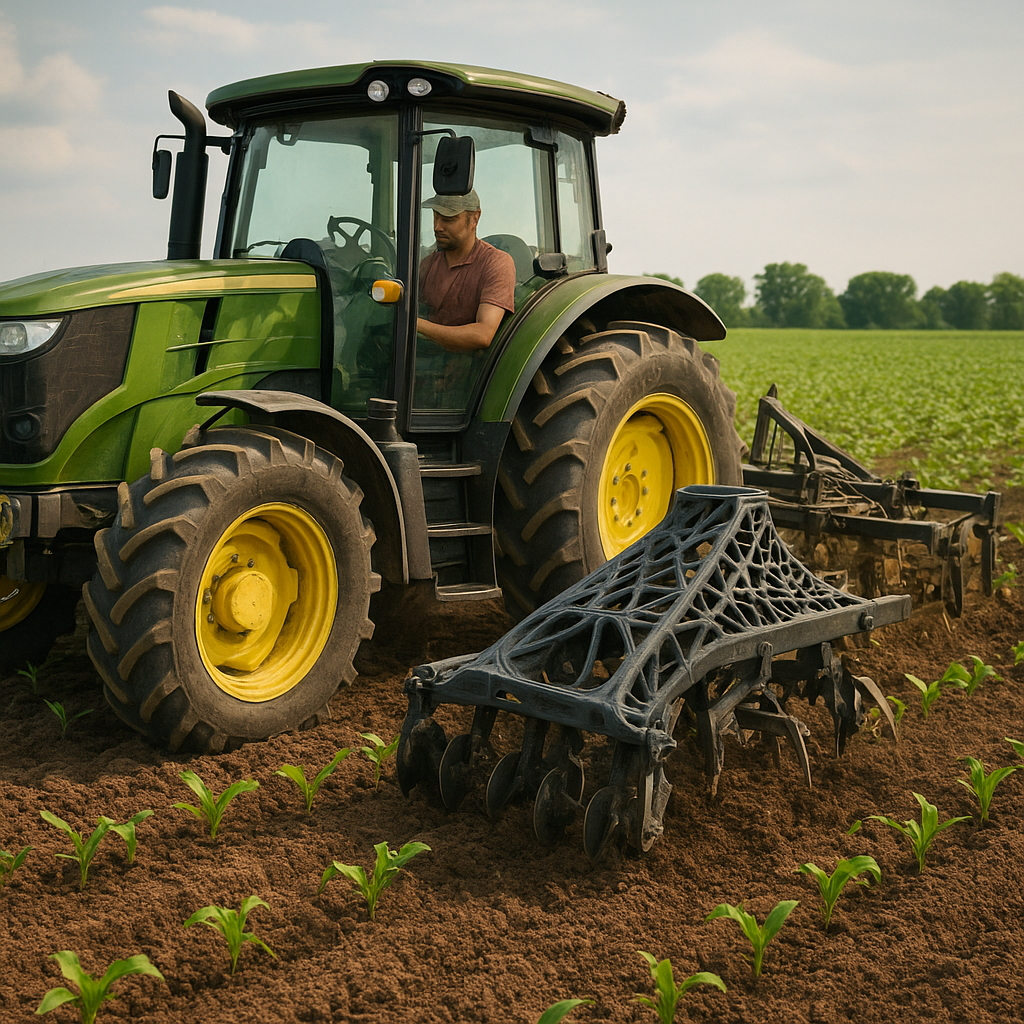
The integration of 3D printing into modern farming machinery is redefining how farmers design, maintain, and deploy equipment. Additive manufacturing unlocks new levels of innovation and efficiency, empowering agricultural stakeholders to overcome supply chain bottlenecks, reduce downtime, and tailor solutions to unique field conditions. From on-site spare part fabrication to lightweight, high-performance tool prototypes, 3D printing is transforming the landscape of impressive agriculture and charting a path toward a more resilient food production system.
Innovations in 3D Printing for Agricultural Equipment
Agricultural equipment has traditionally relied on mass-produced metal castings and machined components. 3D printing shifts this paradigm by enabling the creation of complex geometries and integrated functionalities in a single build. Farmers and engineers can now fabricate seed metering plates with internal channels for precise flow control, combine harvester ducts with curved airflow passages, and sensor housings with built-in mounting features. This level of design freedom fosters a new era of precision agriculture, where each component can be optimized for airflow, weight reduction, or abrasion resistance without extensive tooling.
Advances in materials science have given rise to printable polymers reinforced with glass or carbon fibers, as well as low‐temperature alloys for metal deposition. Plastic parts once considered too weak for field use can now match and sometimes exceed the performance of traditional injection‐molded components. By adopting additive processes, manufacturers achieve unprecedented turnaround times—from digital model to functional prototype in under 24 hours. This rapid cycle accelerates product development and helps farmers adapt equipment to evolving crop varieties, soil types, and climatic challenges.
On-Demand Spare Parts
- Reduced inventory costs: Store digital files instead of bulky warehouses.
- Minimized downtime: Print critical components on-site during peak season.
- Enhanced durability: Optimize infill patterns and wall thickness for field stresses.
- Global accessibility: Remote operations can source files from an online library within minutes.
Such flexibility transforms maintenance strategies. A farmer in a remote region can download a replacement nozzle for a pesticide sprayer, print it locally, and resume operations without waiting weeks for courier delivery.
Customization and Rapid Prototyping
One of the most compelling advantages of 3D printing in agriculture is the ability to iterate designs quickly. Traditional prototyping would require new molds or CNC setups for each version, adding time and cost. In contrast, digital CAD files can be tweaked and reprinted in hours, allowing engineers to validate form, fit, and function in real-world field trials. This rapid feedback loop fosters a culture of continuous improvement, driving up overall farm productivity.
Modular attachments can be designed to snap onto existing tractors or implements, enabling a single base machine to perform multiple tasks—seeding, weeding, or fertilizing—with interchangeable heads. These heads can incorporate adjustable row spacings, spray patterns, or cutting angles. As cropping systems evolve, farmers gain the adaptability to reconfigure equipment without costly new purchases. Ultimately, additive manufacturing democratizes equipment design by placing creative control in the hands of end users rather than centralized OEMs.
Beyond hardware, open‐source repositories of 3D models allow collaborative refinement across the global agricultural community. A tool developed in South America for no-till planting can be adapted by European growers facing similar soil compaction issues. Such cross-pollination of ideas accelerates innovation and underscores the radical potential of on‐farm engineering.
Sustainability and Environmental Benefits
Environmental stewardship is central to the future of farming, and 3D printing offers tangible sustainability gains. Traditional subtractive manufacturing wastes up to 90% of the raw material in machining processes. Additive techniques build parts layer by layer with minimal scrap, slashing material consumption and energy usage. Farmers can also utilize recycled feedstock derived from agricultural waste streams—such as biopolymers sourced from corn stover or rice husks—to print biodegradable components that return to the soil at end of life, promoting a circular economy within the agri-sector.
Localized production reduces carbon emissions tied to logistics. No longer must a farmer wait for imported castings shipped across continents; instead, parts are produced on-farm or at nearby service centers. This decentralization curtails the carbon footprint of spare parts supply and strengthens resilience against global disruptions. The cumulative effect is a more sustainability-driven approach to equipment lifecycle management, aligned with environmental regulations and stakeholder expectations.
Water management tools—such as custom-designed drip irrigation manifolds—can be precisely tuned to field topography, minimizing runoff and evaporation. The ability to prototype and refine nozzle geometries ensures every drop counts, bolstering water-use efficiency in regions under drought stress.
Future Outlook: Integration with Smart Farming
As 3D printing matures, its synergy with emerging technologies promises even greater gains for impressive agriculture. Embedded sensors, wireless antennas, and microfluidic channels can be co-printed within structural parts, creating self-monitoring implements that relay data on temperature, moisture, and wear in real time. These “smart tools” close the loop between field conditions and machine behavior, enabling predictive maintenance and autonomous adjustments during planting or harvesting.
Robotic swarms equipped with printed grippers and sowing heads could perform precision tasks at plant level, facilitating ultra-dense planting strategies and targeted weed control. The cost-effectiveness of printing lightweight robots opens access for smaller farms that previously lacked capital for high-end automation. Moreover, the digital nature of designs allows on-demand scaling; a cooperative of farmers can pool resources to print dozens of devices during peak season and recycle them afterward.
Looking further ahead, bio-inks containing living cells may be used to print biodegradable sensors, or even living plant structures that integrate directly with soil ecosystems. This frontier holds promise for regenerative agriculture, where printed scaffolds support root growth and soil health restoration. By combining additive manufacturing with biotechnology, future equipment could be as much a living network as a mechanical tool—embodying the ultimate blend of resilience and customization to meet tomorrow’s agricultural challenges.