
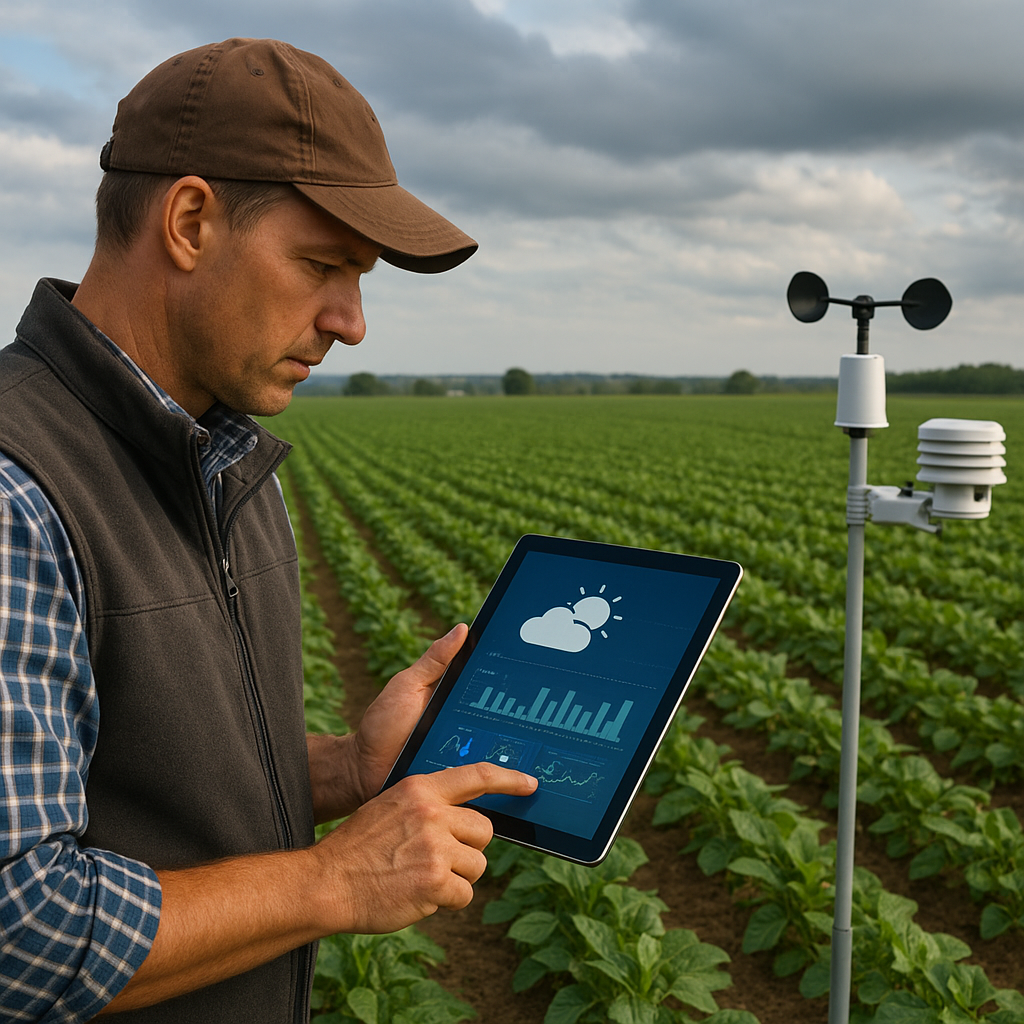
Smart Weather Forecasting for Precision Agriculture harnesses the power of modern technology to revolutionize farming practices. By merging atmospheric science with advanced computing, growers gain unprecedented insights into weather dynamics. This collaboration not only enhances crop performance but also reduces resource waste and bolsters farm resilience against climate variability.
Weather Data Acquisition Techniques
Reliable forecasts begin with accurate observations. Multiple data sources contribute to building a comprehensive picture of local conditions.
- Satellites: Geostationary and polar-orbiting satellites continuously monitor cloud cover, temperature, humidity, and vegetation indices across vast areas. Their remote sensing capabilities transform raw imagery into actionable metrics for agronomists.
- Drones: Unmanned aerial vehicles equipped with multispectral sensors capture high-resolution snapshots of field conditions. These agile platforms fly below cloud cover to pinpoint microclimatic variations and crop stress hotspots.
- Automated Weather Stations: Ground installations record temperature, wind speed, rainfall, and soil moisture in real time. When networked across a farm or region, they feed granular data into forecasting models, yielding hyperlocal insights.
- Internet of Things (IoT) Sensors: Embedded probes within the soil profile measure moisture, nutrient levels, and salinity. Wireless connectivity relays this information to central databases, where it is fused with meteorological readings.
- Public and Private Data Feeds: Government agencies, research institutions, and commercial vendors share archives and live streams of atmospheric observations. These repositories augment on-farm measurements and improve model calibration.
Advanced Forecasting Models and Technologies
Turning raw data into dependable predictions involves sophisticated computational methods and intelligent algorithms.
Numerical Weather Prediction (NWP)
NWP uses mathematical equations to simulate atmospheric physics. By inputting current state variables—pressure, temperature, moisture—and applying fluid dynamics, these models project weather patterns hours to weeks ahead. Enhanced supercomputing power allows for finer grid resolutions, elevating forecast precision.
Machine Learning Enhancements
Classic NWP outputs can be refined through machine learning techniques. Neural networks, random forests, and support vector machines recognize non-linear relationships among predictors, correcting systematic biases. They also learn from historical forecast errors, delivering tailored adjustments for local conditions.
Ensemble Forecasting
Ensemble methods generate multiple simulations by varying initial conditions or model parameters. The resulting probability distributions quantify forecast uncertainty, enabling risk-aware decision-making. Farmers can weigh the likelihood of events such as frost, drought, or heavy rainfall before scheduling critical operations.
Nowcasting with High-Frequency Updates
Short-term predictions (0–6 hours) rely on rapid-update models and real-time radar input. Nowcasting algorithms track storm cells and precipitation bands, producing minute-by-minute projections. This level of detail is crucial for scheduling irrigation, pesticide applications, and harvest activities to avoid weather-related losses.
Integrating Forecasts with Farm Management Systems
Forecast data alone provides limited value unless seamlessly incorporated into operational workflows and decision-support tools.
Decision Support Platforms
Cloud-based dashboards centralize weather forecasts, sensor readings, and agronomic rules. Growers receive automated alerts for critical thresholds: wind speeds that impede spraying, temperature drops threatening bloom stages, or impending water deficits. These platforms streamline decision-making by presenting actionable recommendations in clear, visual formats.
Precision Irrigation Scheduling
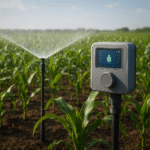
By coupling soil moisture sensors with short- and medium-range forecasts, irrigation controllers optimize water delivery. Predictive algorithms calculate irrigation volumes and timing that maintain optimal soil moisture without overwatering. This approach reduces water consumption and enhances sustainability.
Variable-Rate Application
Forecast-driven prescriptions adjust seeding density and fertilizer distribution based on expected weather conditions. For example:
- If upcoming rainfall is forecasted, reduce pre-plant fertilizer to minimize runoff.
- In anticipated dry spells, increase seed spacing to limit crop competition for scarce moisture.
- When mild, wet weather is predicted, schedule fungicide applications to curb disease onset.
These targeted strategies maximize input efficiency and elevate crop health.
Harvest and Post-Harvest Logistics
Weather forecasts help plan optimal harvest windows, avoiding damage from rain or extreme heat. Post-harvest operations—drying, storage, and transportation—also benefit from predictive insights. For instance, avoiding high-humidity days prevents grain spoilage and reduces energy costs for drying.
Challenges and Future Directions
While advances are promising, several obstacles must be addressed to fully realize the potential of smart weather forecasting in agriculture.
Data Integration and Standardization
Diverse sensor networks and forecast providers often use proprietary formats. Establishing open data standards and interoperable protocols is essential for creating unified farm intelligence systems.
Model Downscaling
Global and regional models operate at coarse resolutions unsuitable for individual farms. Ongoing research focuses on downscaling techniques that translate large-scale outputs into highly localized forecasts, capturing microclimates within fields.
Cost and Accessibility
High-end sensors, drones, and computing resources can be cost-prohibitive for smallholder farmers. Developing low-cost, robust alternatives and fostering cooperative sharing schemes will broaden adoption and improve rural resilience.
AI Explainability
As machine learning models gain prominence, understanding the rationale behind their predictions becomes critical. Transparent AI frameworks will help agronomists trust and validate forecast adjustments.
Climate Change Impacts
Shifting climate regimes introduce new patterns of weather extremes. Forecasting systems must continuously adapt by retraining models on emerging climatic trends and incorporating long-term scenario analyses.
By addressing these challenges, the agriculture sector can harness cutting-edge meteorological science to boost yield, enhance farm resilience, and achieve unprecedented levels of optimization in resource management. Precision forecasting stands at the forefront of this transformation, ensuring that every sowing, spraying, and harvesting decision is backed by reliable, actionable insight.