




Smart insect monitoring systems represent a revolutionary advancement in modern agriculture, blending cutting-edge technologies to enhance crop health, optimize pest control, and promote sustainable practices. By leveraging networks of intelligent devices and advanced analytics, farmers can achieve unprecedented levels of precision and efficiency, transforming Integrated Pest Management into a truly adaptive, data-driven discipline.
Technological Foundations for Smart Monitoring Systems
The core architecture of a smart insect monitoring solution relies on a synergy of multiple technological pillars. Wireless sensors, edge computing nodes, and cloud-based platforms collaborate to detect, analyze, and predict pest populations. Through continuous field deployment, these devices capture environmental parameters—temperature, humidity, crop stress levels—and insect activity, transmitting raw data via low-power wide-area networks.
Artificial intelligence plays a central role in interpreting the vast streams of incoming data. Advanced machine learning models classify insect species, count trap catches, and identify hotspots of infestation. By integrating satellite imagery and drone-based remote sensing, the system achieves a holistic view of the farm, mapping pest trends across large acreages in real-time.
Automation of field operations enhances both responsiveness and labor savings. Autonomous ground vehicles and aerial drones can be dispatched to inspect trap stations or distribute targeted treatments. These robotic agents rely on precision navigation and obstacle avoidance to operate safely among crops, minimizing human intervention and ensuring consistency in monitoring routines.
Key Components and Functionalities
Sensor Networks and Trap Devices
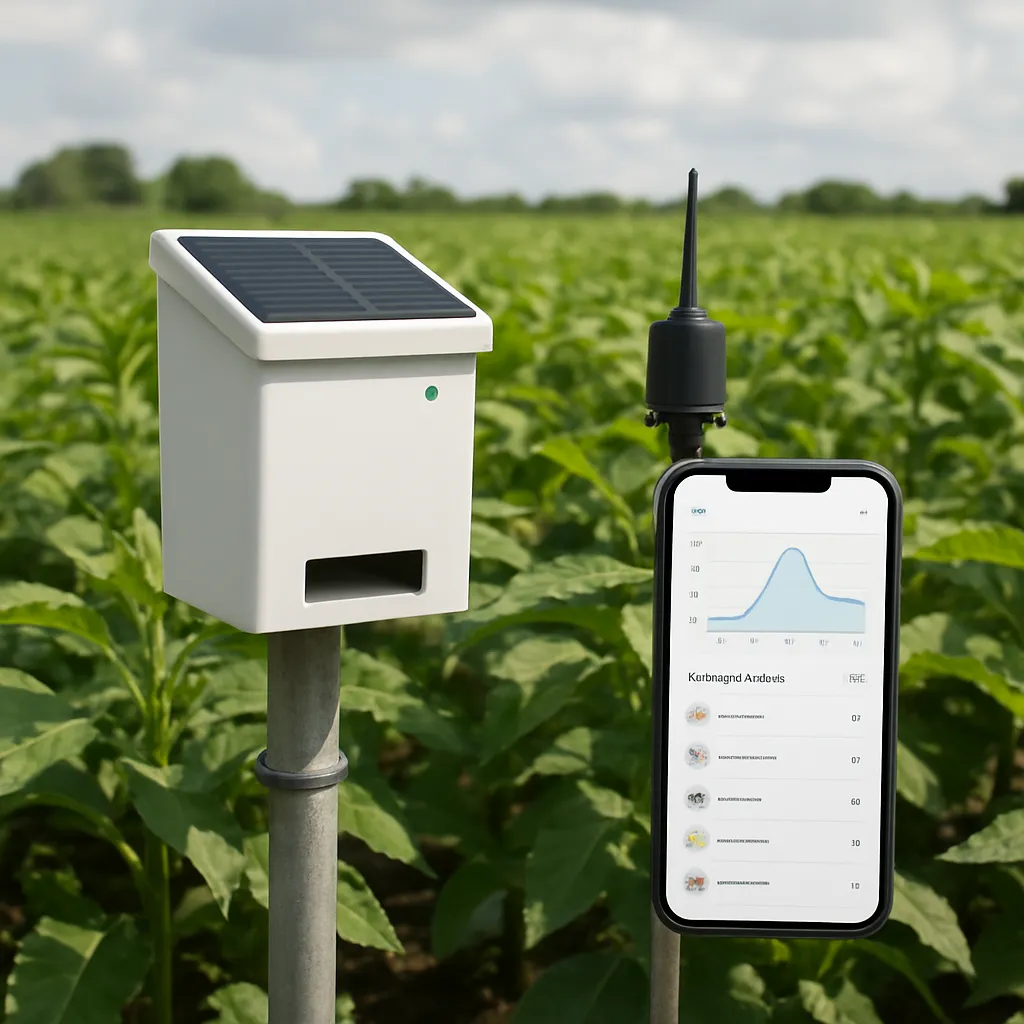
- Deployable pheromone traps equipped with image sensors for species recognition.
- Environmental sensor modules measuring microclimate factors that influence insect behavior.
- Solar-powered stations ensuring continuous operation without frequent maintenance.
Data Analytics and AI Engines
Cloud-hosted platforms ingest and preprocess sensor outputs, feeding them into neural networks trained on labeled datasets of insect images and flight patterns. Real-time analytics dashboards offer farm managers intuitive visualizations of infestation levels, thereby enabling rapid decision-making for targeted interventions.
Communication Infrastructure
- Low-power wide-area network (LPWAN) protocols for long-range data transmission.
- Mesh network configurations that provide redundancy and improve connectivity across uneven terrain.
- Secure data encryption to protect sensitive agricultural intelligence from unauthorized access.
Autonomous Response Mechanisms
Once threshold levels of pest activity are detected, the system can trigger automated responses:
- Variable-rate application of biopesticides precisely at infestation sites.
- Deployment of beneficial insect releases guided by predicted pest hotspots.
- Adjustment of crop management schedules to disrupt pest life cycles through cultural controls.
Benefits and Challenges in Integrated Pest Management
Implementing smart insect monitoring yields multiple advantages:
- Reduced reliance on broad-spectrum chemical sprays, promoting sustainability and environmental health.
- Optimized resource allocation, lowering operational costs and labor demands.
- Enhanced crop resilience through early detection of pest incursions, preventing yield losses.
- Improved traceability and compliance with regulatory frameworks governing pesticide usage.
Despite these gains, several hurdles must be addressed:
- Initial investment costs for hardware deployment and AI integration may be prohibitive for smallholder farms.
- Complexity in calibrating sensor networks to local ecological conditions requires specialized expertise.
- Data management challenges arise from heterogeneous data sources, demanding robust interoperability standards.
- Ensuring system reliability in harsh field environments—extreme weather, wildlife interference, or vandalism—remains a critical concern.
Strategies for Adoption and Scale-Up
Successful integration of smart monitoring into existing agricultural operations relies on collaborative approaches:
- Partnerships between technology providers, agronomists, and extension services to facilitate knowledge transfer.
- Modular system designs allowing incremental upgrades, thereby lowering entry barriers for growers.
- Training programs and user-friendly interfaces that empower farm personnel to interpret analytics and manage devices effectively.
- Financing models such as equipment leasing or pay-per-use services to democratize access to advanced pest control tools.
Future Directions in Smart Insect Monitoring
Ongoing research aims to enhance the resilience and adaptability of monitoring platforms. Integrating genomic tools—such as environmental DNA (eDNA) sampling—with sensor networks could enable detection of cryptic pest species before visual signs emerge. Advances in swarm robotics promise coordinated multi-agent inspections, distributing tasks dynamically across fleets of drones and ground units.
Furthermore, coupling smart insect monitoring with broader precision agriculture systems will create fully integrated farm management solutions. By synchronizing pest data with nutrient management, irrigation scheduling, and yield forecasting, growers stand to achieve unprecedented levels of productivity, while safeguarding the ecosystem services underpinning agricultural sustainability.