



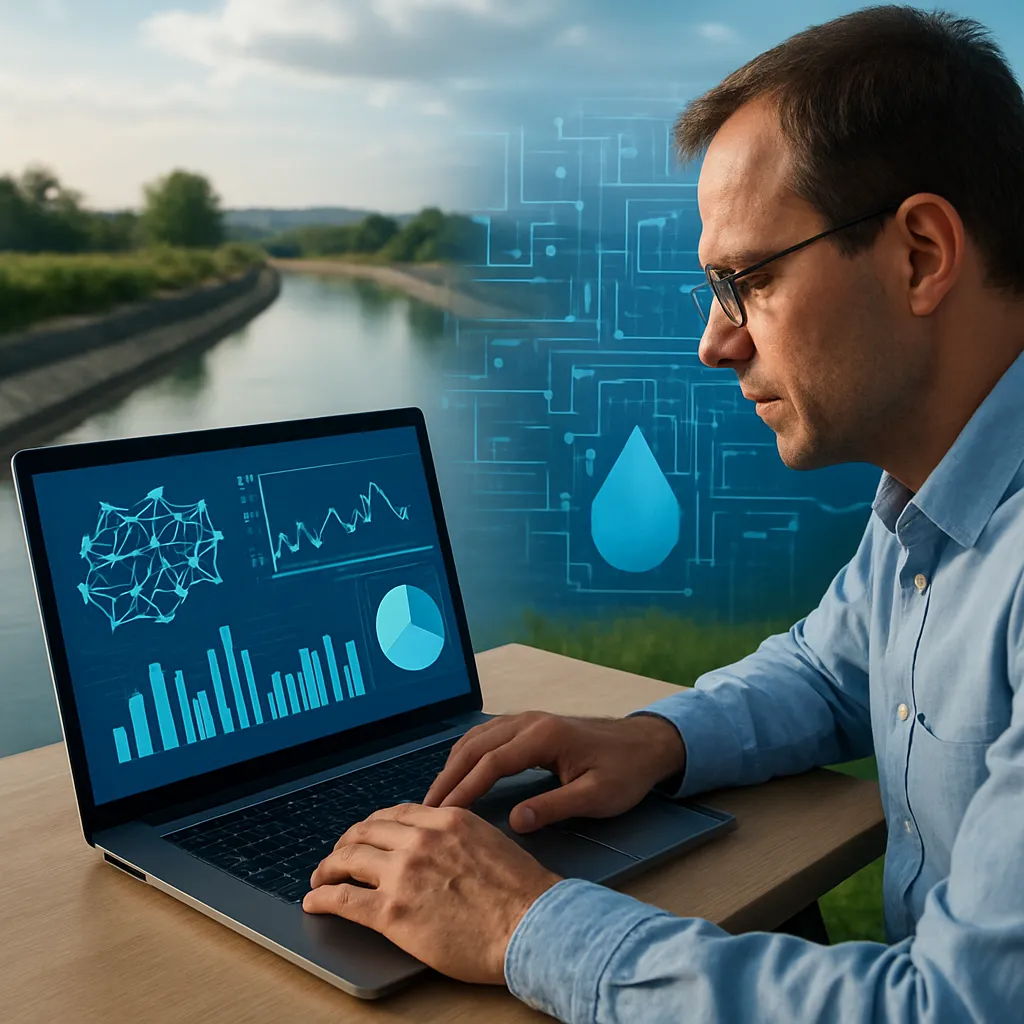
As the global demand for food and water resources intensifies, agricultural systems must evolve to harness the power of cutting-edge technologies. By integrating machine learning with advanced **sensor** deployments and intelligent **algorithms**, farmers and water managers can achieve unprecedented levels of efficiency. This article delves into how data-driven methods are transforming water resource management within an **impressive** agricultural context, driving both **sustainability** and **resilience**.
Innovative Sensor Networks for Precision Water Management
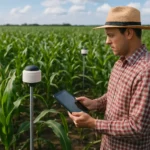
Effective water management begins with high-resolution data. Recent advances in low-cost sensor technologies have enabled continuous monitoring of soil moisture, ambient temperature, and nutrient levels. These **sensor** networks provide the raw inputs necessary for **analytics** platforms to generate actionable insights.
- Wireless connectivity: LoRaWAN and NB-IoT radios facilitate long-range data transmission without significant power consumption.
- Real-time monitoring: Continuous data streams allow for immediate detection of anomalies, such as rapid moisture loss or pump failures.
- Edge computing: Small microcontrollers process data locally, reducing latency and network traffic.
By combining sensor arrays with remote satellite imagery and UAV (unmanned aerial vehicle) surveys, managers can map fields at centimeter-scale resolution. These multi-source inputs feed into machine learning pipelines, enabling nuanced **optimization** of irrigation schedules and resource allocation.
Machine Learning Models Driving Predictive Irrigation
Predictive modeling stands at the heart of intelligent irrigation systems. Supervised algorithms such as random forests, gradient boosting, and deep neural networks can forecast water demand by analyzing historical weather patterns, crop phenology, and soil characteristics.
Data Preparation and Feature Engineering
High-quality predictions depend on rigorous preprocessing. Key steps include:
- Outlier removal to filter sensor glitches and extreme readings.
- Normalization of features like humidity, rainfall, and evapotranspiration rates.
- Time-series decomposition, capturing seasonal and trend components.
Model Training and Validation
After assembling a clean dataset, engineers split it into training, validation, and test sets. Common performance metrics include mean absolute error (MAE), root mean squared error (RMSE), and coefficient of determination (R²). Ensemble techniques often yield superior accuracy, combining multiple weak learners into a robust predictor.
Deployment leverages cloud-native infrastructure to schedule predictions at regular intervals. These forecasts inform automated valves and drip systems, ensuring water is delivered exactly when and where it’s needed.
Adaptive Control Systems and Smart Actuation
An essential component of smart irrigation is the closed-loop control that adjusts water delivery based on model outputs. Adaptive control architectures include:
- PID controllers: Simple yet effective for maintaining setpoints in greenhouse environments.
- Model predictive control (MPC): Anticipates future states by running online simulations, optimizing water usage across multiple zones.
- Reinforcement learning: Agents learn optimal watering strategies through trial and error, maximizing crop yield over time.
These systems address unpredictable variables such as sudden storms or equipment faults. When sensors detect anomalies, machine intelligence recalibrates setpoints to safeguard plant health and conserve resources. The fusion of **algorithms** and mechanical actuation enhances both energy efficiency and **resource allocation**.
Data-Driven Strategies for Resilient Agroecosystems
Achieving long-term **resilience** in agriculture requires integrating water management with broader sustainability goals. Machine learning facilitates:
- Crop diversity optimization: Predictive tools identify optimal planting patterns that balance yield and risk.
- Soil health monitoring: Image analysis and spectral data detect nutrient deficiencies before visual symptoms appear.
- Disease outbreak forecasting: Time-series models alert growers to potential fungal or bacterial invasions.
Beyond individual farms, regional water authorities adopt digital twins to simulate watershed hydrology. These virtual replicas integrate weather forecasts, streamflow gauges, and reservoir levels. By running millions of scenarios, planners can evaluate trade-offs between irrigation withdrawals and ecological needs.
Collaborative platforms encourage stakeholders to share data, fostering **sustainability** across the supply chain. From seed breeders to end consumers, every actor gains visibility into water footprints, driving improvements through shared intelligence.
Future Directions in Smart Water Resource Management
Emerging trends point toward even more **impressive** applications of artificial intelligence in agriculture:
- Federated learning schemes that protect data privacy while pooling insights from multiple farms.
- Explainable AI models that provide transparent justifications for irrigation recommendations.
- Integration with blockchain technology to verify water usage and incentivize conservation.
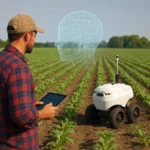
- Robotic platforms that autonomously navigate fields, combining perception, planning, and precise watering.
As these technologies mature, they will unlock new levels of productivity and **sustainability**. Empowered by machine learning, the future of water resource optimization in agriculture promises to be both **innovative** and **transformative**, ensuring global food security in the face of mounting environmental challenges.