

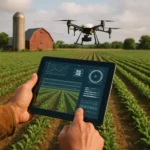
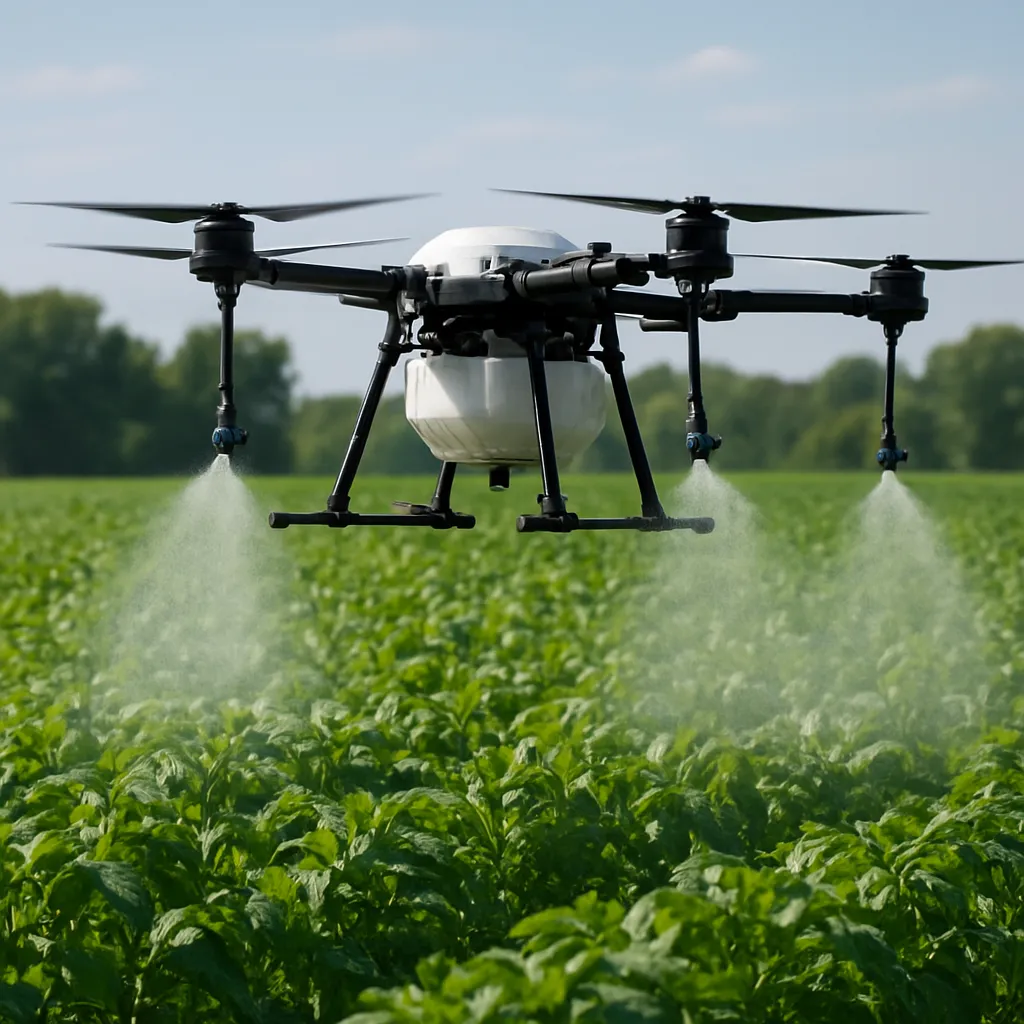
Precision fertilizer spraying with drone technology is transforming modern agriculture by combining advanced aerial robotics with data-driven strategies. Farmers and agronomists increasingly turn to unmanned aerial vehicles (UAVs) to achieve remarkable gains in efficiency, sustainability, and crop productivity. This article delves into the technological underpinnings, operational benefits, environmental impacts, and future prospects of deploying drones for precision nutrient management.
Technological Foundations of Drone-Based Application
At the heart of precision fertilizer spraying lies a suite of integrated systems. A typical agricultural drone platform incorporates high-resolution sensors, GPS guidance, variable-rate application nozzles, and onboard computation. These components work in concert to ensure that every milliliter of nutrient solution is delivered with pinpoint accuracy.
Sensing and Mapping
- Multispectral and thermal imaging cameras detect plant health indices such as NDVI (Normalized Difference Vegetation Index) to identify stress zones.
- LIDAR sensors generate detailed elevation contours, enabling constant flight altitude and uniform spray coverage even over undulating terrain.
- Real-time data transfer to a ground station or cloud platform for immediate analysis and flight plan adjustments.
Navigation and Control
- RTK-GPS modules provide centimeter-level positional accuracy, crucial for following complex waypoints and boundary lines.
- Autonomous flight controllers integrate obstacle avoidance algorithms, safeguarding both equipment and crops.
- Geofencing capabilities restrict flight area to legal and safe zones, while automated failsafe functions handle low battery or signal loss.
Variable-Rate Application
- Smart nozzles adjust droplet size and spray rate based on instantaneous speed and altitude, minimizing drift and over-application.
- Prescription maps, derived from field surveys, regulate nutrient delivery by zones of differing fertility or crop growth stage.
- Closed-loop feedback ensures that applied volume matches the prescribed dose, reducing waste and environmental runoff.
Operational Advantages and Field Implementation
Deploying drones for fertilizer spraying offers numerous practical benefits that traditional methods struggle to match. These include reduced labor demands, faster turnaround times, and improved coverage consistency. Farmers can respond rapidly to emerging nutrient deficits or pest outbreaks without relying on heavy machinery.
Labor and Time Savings
- Drones cover up to 40 hectares per hour, compared to 10–15 hectares by tractor-mounted sprayers.
- Minimal crew requirements: one operator can manage multiple drones simultaneously, optimizing workforce allocation.
- Quick setup and teardown—drones can be airborne within minutes of arrival at the field, crucial for time-sensitive interventions.
Precision and Uniformity
- Laser-based altitude holding guarantees uniform droplet distribution even in uneven fields.
- Automated overlap control prevents both untreated gaps and excessive overlaps that waste fertilizer.
- Flight logs document every pass, enabling traceability and compliance with agricultural regulations.
Accessibility to Challenging Terrain
- Drones easily traverse steep slopes, wetlands, and remote plots inaccessible to tractors.
- Reduced soil compaction preserves soil structure and microbial ecosystems.
- Lower risk of machinery-related accidents in soft or waterlogged soils.
Environmental and Economic Impacts
Precision drone spraying mitigates the negative externalities of conventional fertilizer application. By targeting only the required areas and using fine-tuned doses, operators cut down on chemical runoff, greenhouse gas emissions, and potential groundwater contamination.
Reduced Input Waste
- Variable-rate strategies can lower total fertilizer use by up to 30%, translating into significant cost savings and reduced environmental burden.
- Minimized off-target drift protects neighboring habitats, water bodies, and non-target organisms.
- Precision dosing supports plant uptake efficiency, reducing the release of nitrous oxide, a potent greenhouse gas.
Sustainable Resource Management
- Data-driven nutrient application reinforces soil health by avoiding over-fertilization that leads to salt buildup.
- Regular mapping and monitoring foster continuous improvement in field management, aligning with regenerative agriculture principles.
- Long-term savings on fertilizer and remediation costs enhance farm profitability and resilience.
Economic Viability
- Lower capital expenditure compared to manned aircraft or deploying additional ground-based machinery.
- Payback periods as short as two growing seasons when factoring in savings on labor, fuel, and inputs.
- Scalable service models enable both large-scale farms and smallholders to access drone-based fertilization through contract service providers.
Future Prospects and Challenges
While drone technology has advanced rapidly, several challenges must be addressed to unlock its full potential. Regulatory frameworks, data integration, and technical limitations all play a role in shaping the next wave of innovation in agritech.
Regulatory and Airspace Management
- Harmonizing UAV regulations across regions to facilitate cross-border service provision and standardization.
- Implementing dynamic airspace management systems to integrate drones, manned aircraft, and ground operations safely.
- Ensuring operator certification and adherence to environmental guidelines.
Software and Data Integration
- Developing unified digital platforms that merge drone-derived maps with farm management information systems (FMIS).
- Leveraging machine learning to refine prescription maps and predict nutrient requirements based on historical performance.
- Enabling seamless data exchange between equipment manufacturers, agronomists, and farmers for collaborative improvement.
Technical Innovations
- Exploring swarming technology to coordinate fleets of drones for simultaneous multi-field operations.
- Enhancing payload versatility to handle a broader range of fertilizers, biostimulants, and even biological control agents.
- Optimizing battery technology and charging infrastructure to extend flight endurance and reduce downtime.
As agricultural landscapes evolve, drone-based precision fertilizer spraying stands at the forefront of a transformative era. By integrating advanced sensors, autonomous flight, and data analytics, this technology holds the promise of more resilient, productive, and environmentally responsible farming systems worldwide.