







Agricultural stakeholders increasingly embrace data-driven solutions to protect harvests and secure financial stability. Smart crop insurance leverages cutting-edge technologies—ranging from satellite imagery to blockchain and advanced analytics—to optimize risk management strategies. By reimagining traditional models, this approach fosters greater resilience against unpredictable weather patterns, pest outbreaks, and market fluctuations. The following exploration unpacks the fundamental components, technological enablers, and practical frameworks shaping the new era of insurtech in agriculture.
Understanding the Challenges in Crop Insurance
Efficient insurance coverage for farmers has long been hampered by several systemic obstacles. First and foremost, climate variability introduces actuarial uncertainty. Droughts, floods, and unseasonal temperature swings disrupt historical loss patterns, making it arduous for insurers to set accurate premiums. Traditional indemnity-based products often require extensive field inspections and manual verification of claims, resulting in delays and disputes over payment eligibility.
Moreover, smallholder farmers in remote regions face limited access to quality insurance options. Distribution channels are constrained by high administrative costs and a lack of digital infrastructure. Without streamlined processes, many growers remain either uninsured or underinsured, exposing them to catastrophic income losses. A further complication arises from moral hazard and adverse selection: policyholders may overstate potential risks or reduce mitigation efforts once coverage is obtained, driving up loss ratios and undermining product sustainability.
To overcome these hurdles, the industry is gravitating toward algorithm-driven solutions that can process vast amounts of environmental and agronomic data. Integrating real-time insights with machine learning techniques enhances the precision of risk assessment and underwriting, paving the way for more affordable and accessible insurance. This shift heralds a new paradigm in which agility and automation form the backbone of modern crop protection.
AI-Powered Risk Assessment and Pricing
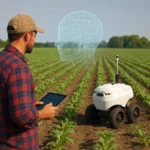
At the heart of smart crop insurance lies a suite of AI algorithms designed to model risk with unprecedented granularity. Advanced remote sensing platforms capture multispectral and thermal data from drones and satellites, identifying stress indicators in crops long before visible symptoms appear. By applying machine learning to these datasets, insurers can generate hyper-localized yield predictions and loss probabilities.
Central to this methodology is the deployment of predictive analytics. Historical weather records, soil composition maps, and agronomic trials feed into neural networks that detect complex, nonlinear relationships between environmental variables and crop performance. These models yield dynamic risk scores, enabling underwriters to adjust premiums in line with evolving conditions. In particular, dynamic pricing frameworks use continuous monitoring to recalibrate coverage levels based on real-time indicators, offering a more responsive alternative to static, end-of-season settlements.
Another critical advance is the integration of actuarial science with AI-driven simulations. Monte Carlo techniques, when combined with high-resolution climate projections, allow insurers to quantify tail risks and design parametric insurance products. Such products trigger payouts automatically when predefined weather thresholds are breached, bypassing the need for labor-intensive claims verification. This not only speeds up compensation—often within days of an adverse event—but also significantly reduces operational overhead.
Implementation Strategies for Smart Crop Insurance
Bringing AI-based insurance solutions to market demands careful orchestration among insurers, technology providers, and agricultural stakeholders. Key implementation strategies include:
- Collaborative Data Ecosystems: Sharing anonymized agronomic and climatic data across public agencies, research institutions, and private firms amplifies the accuracy of risk models. Open-data initiatives foster innovation in product design and enhance trust among participants.
- Modular Technology Stacks: Building flexible, API-driven platforms allows insurers to integrate specialized modules—such as damage detection, policy administration, and payout automation—without overhauling legacy infrastructure.
- Digital Enrollment Channels: Mobile applications and chatbots streamline the onboarding process for farmers, reducing paperwork and ensuring swift policy issuance. Biometric identification and geotagging verify field boundaries and validate client identities, mitigating fraud risks.
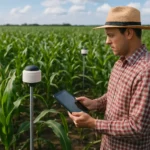
- Smart Contracts: Implementing smart contracts on distributed ledger networks ensures transparent execution of policy terms. When predefined triggers—like a rainfall deficit below a certain threshold—are detected by IoT sensors or meteorological feeds, funds are automatically disbursed to beneficiaries.
- Capacity Building: Training programs for local agents and extension workers equip communities with knowledge about policy features, claims procedures, and risk mitigation practices. Enhanced financial literacy empowers farmers to adopt insurance more confidently.
By embracing these strategies, insurers can achieve greater scalability and cost-efficiency. Automated workflows cut administrative expenses, while digital idiosyncrasies strengthen customer engagement and retention. The resulting ecosystem fosters a virtuous cycle of improved data quality, more precise risk assessment, and increasingly tailored insurance products.
Future Outlook and Innovations
Looking ahead, next-generation smart crop insurance will harness emerging technologies to deepen impact. Edge computing devices installed on-farm will process sensor readings locally, reducing latency and supporting real-time decision-making. AI-driven anomaly detection will flag deviations in plant health within hours, enabling proactive interventions that avert potential losses.
Meanwhile, integration with agricultural advisory services will transform insurance from a purely financial instrument into a holistic risk management tool. Farmers could receive personalized agronomic recommendations—such as optimized fertilizer application or irrigation scheduling—based on predictive stress maps. This synergy between coverage and prevention enhances overall productivity and fosters sustainable intensification.
In parallel, the growth of voluntary carbon markets presents opportunities to link insurance incentives with climate-smart practices. Insurers may reward growers who adopt regenerative agriculture techniques—such as cover cropping or reduced tillage—with premium discounts or bonus payouts. Such programs align environmental stewardship with risk mitigation, creating shared value for stakeholders.
Ultimately, the convergence of AI, IoT, and distributed ledger technologies promises to make crop insurance more transparent, efficient, and equitable. By coupling financial protection with actionable insights, smart crop insurance stands poised to revolutionize global agriculture—delivering stability, sustainability, and prosperity to farming communities worldwide.